

Western executives often assume that good governance prevents disruption. Yet many of the most persistent China joint venture challenges appear in companies with exceptionally strong contracts, clear governance frameworks, and well-defined board authority.
Clear Articles of Association.
Defined board authority.
Explicit operating boundaries.
Formal escalation paths.
On paper, this should create stability.
And yet many China joint ventures with strong legal structures still experience stalled execution, unexpected operational disruption, or decisions that seem to bypass the very governance designed to prevent them.
The problem usually isn’t weak governance.
It’s governance operating without sufficient alignment.
Why “Good Governance” Still Isn’t Enough in China Joint Venture Challenges
In Western systems, governance is designed to control outcomes.
Authority is formal.
Boundaries are contractual.
Decision rights are clearly allocated.
If everyone follows the structure, the company functions as intended.
This logic works well in environments where:
- Corporate priorities are relatively stable
- Decision authority is centralized
- Contracts reliably override competing interests
This assumption underpins most formal governance structures Western companies rely on when forming joint ventures in China.
Many China joint venture challenges arise because these assumptions don’t fully apply.
China joint ventures operate within a broader ecosystem of strategic priorities, relationships, external pressures, and government oversight – many of which sit outside the JV itself.
When those forces shift, governance doesn’t disappear.
But it can be temporarily overridden.
When Strategic Priorities Collide in China Joint Ventures
In one joint venture I’ve been directly involved with managing, the governance framework was exceptionally strong.
The Articles of Association were clear.
Roles and authorities were well defined.
Operating boundaries were understood and respected.
There was no ambiguity about how the JV was meant to function.
And yet, when a larger strategic initiative emerged for one shareholder – an initiative outside the joint venture but carrying greater strategic weight for that shareholder – the JV’s operations were disrupted.
Not because the contract was unclear.
Not because governance was ignored.
Not because anyone acted in bad faith.
But because strategic gravity shifted.
The JV was suddenly competing with a higher-priority objective that demanded resources, attention, and flexibility.
This pattern closely mirrors China’s speed and friction dynamics, where execution accelerates once alignment exists – but competing priorities can quietly absorb resources without open confrontation.
Governance did not prevent the disruption – and, in hindsight, it probably couldn’t have.
Contracts Can’t Always Compete with Strategic Gravity
This is where many Western leaders misdiagnose China joint venture problems.
The instinctive reactions are familiar:
- “The agreement wasn’t respected.”
- “The governance wasn’t enforced.”
- “We need tighter controls.”
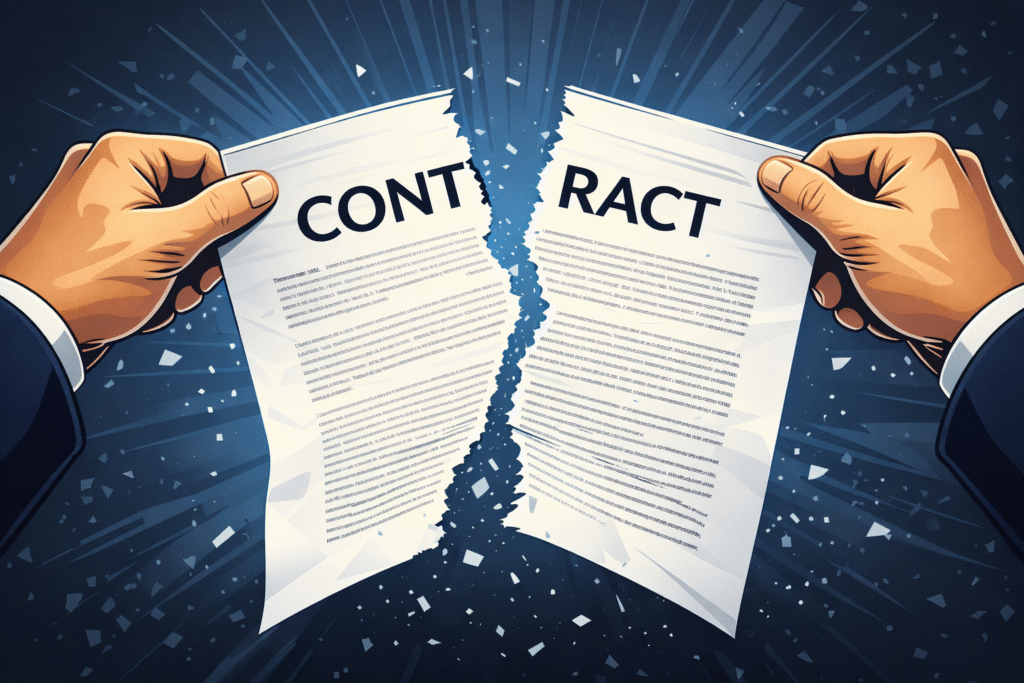
- “The agreement wasn’t respected.”
- “The governance wasn’t enforced.”
- “We need tighter controls.”
But strong contracts can’t always counter:
- Portfolio-level strategic imperatives
- Political or reputational risk at the parent level
- Time-sensitive initiatives with broader consequences
This disconnect becomes clearer when viewed through the lens of Chinese business hierarchy and how authority actually functions inside the system.
Research on international joint ventures has repeatedly shown that formal governance mechanisms lose effectiveness when strategic priorities shift at the parent level, especially in complex, multi-stakeholder systems.
Harvard Business Review has documented this dynamic across global joint ventures.
Especially when a joint venture is only one part of a much larger organizational system.
This doesn’t mean contracts are irrelevant.
It means they have limits.
In China, governance sets boundaries – but alignment determines the road map.
The Real Role of Governance: Containment, Not Control
Here’s the critical distinction.
In this situation, governance didn’t fail.
What it did was contain the damage.

The disruption did not:
- Dissolve the joint venture
- Collapse trust entirely
- Trigger legal escalation
- Turn into a zero-sum conflict
Instead, the existing governance framework provided a platform to:
- Rebuild trust
- Re-align priorities
- Reset expectations
- Reaffirm the long-term purpose of the venture

This aligns with a consistent theme in China-focused legal analysis: contracts define rights, but relationships and alignment determine outcomes—especially when unexpected pressures arise.
This point is frequently emphasized by China Law Blog when examining why enforcement alone rarely resolves JV disputes.
That recovery process mirrors how decisions don’t happen in the meeting, but are sequenced and resolved afterward through internal consensus and alignment.
Strong governance didn’t prevent disruption.
It made recovery possible.
That’s a very different, and far more realistic, standard of success.
Why Western Leaders Often Misread These Moments
Western executives are trained to view governance as a preventative system.
If something goes wrong, the assumption is:
“The system failed.”
In China joint ventures, governance is better understood as a stabilizing system.
It absorbs shocks.
It creates space for correction.
It allows alignment to be rebuilt without loss of face.
The real failure isn’t disruption.
The real failure is when governance lacks the flexibility and relational foundation to survive disruption.
What Actually Makes Governance Work in China Joint Ventures
Effective governance in China joint ventures does not come from tighter controls.
It comes from:
- Pre-alignment, not just formal approval
- Sequencing, not pressure for speed
- Relationship awareness, not authority alone
- Elasticity, not rigidity
Strong boards don’t just ask:
“Do we have the right to do this?”
They ask:
“Is the system aligned enough to sustain this decision?”
China Joint Venture Challenges Are About Alignment, Not Enforcement
The lesson from most China joint venture challenges is not that Western governance models are wrong.
It’s that they are incomplete when applied without cultural and strategic context.
Disruption will happen.
Priorities will collide.
External forces will intrude.
The question isn’t whether your governance can prevent all of that.
The question is whether it’s strong enough – and flexible enough – to survive it.
Because in China joint ventures, governance doesn’t succeed by eliminating disruption.
It succeeds by ensuring the partnership still exists and can move forward, even after disruption occurs.
Frequently Asked Questions About China Joint Venture Challenges
Does this mean contracts don’t matter in China joint ventures?
No. Contracts matter deeply. But they define boundaries, not behavior. In China joint ventures, alignment determines how those boundaries are respected when priorities shift.
How can Western companies reduce disruption in China joint ventures?
By focusing on pre-alignment, strategic sequencing, and understanding where the JV sits within a partner’s broader priority system. Not just by tightening contractual controls.
Is disruption a sign that a China joint venture is failing?
Not necessarily. In many China joint ventures, disruption is a stress test. Strong governance determines whether the partnership fractures – or recovers and moves forward.
Enjoying this?
Get weekly, real-world insights on China joint ventures and China manufacturing.