

What global leaders can learn from their execution model and how Chinese companies move faster
If you’ve worked with a Chinese manufacturer or partner in the last few years, one thing stands out more clearly today than ever before:
Speed.
China’s ability to react, adjust, and execute has only accelerated, even as global markets slow down. Samples appear in days. Problems are solved within hours. New coating trials start the next morning. Entire production lines get reconfigured in a single afternoon — not because conditions are easier in China, but because the system itself is built to move.
Where Western companies plan, China executes. Where the West pilots, China produces. And where Western teams debate, Chinese teams adjust in real time.
To an outsider, it looks chaotic. But to those who’ve operated inside the system, this is simply how China works. Understanding why Chinese companies move faster requires looking beneath the surface—into culture, structure, decision-making, and national priorities.
Chinese companies don’t just move fast—they’re engineered for speed. And the reasons behind this velocity hold important lessons for Western leaders.
1. A Culture Built on Pragmatism, Not Perfection
Western organizations typically move in a long sequence:
Pilot → Analysis → Review → Risk Assessment → Approval → Rollout
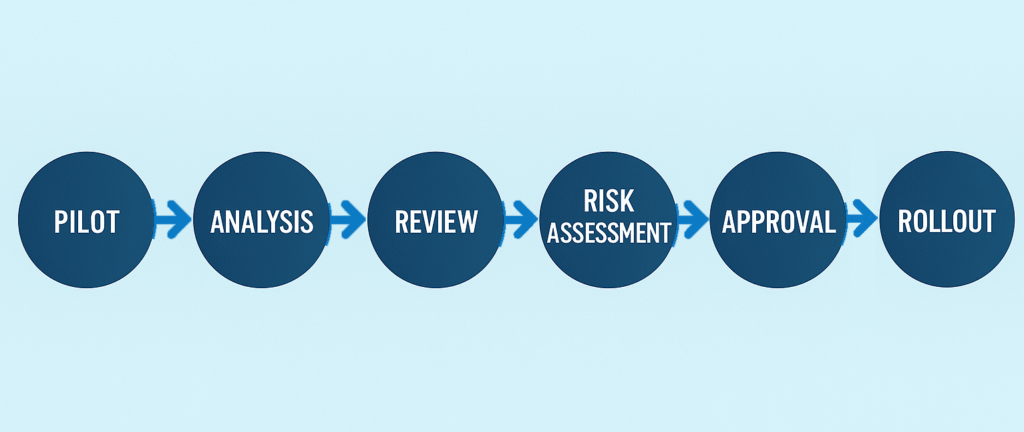
China flips that sequence:
Pilot → Rollout → Improve During Execution
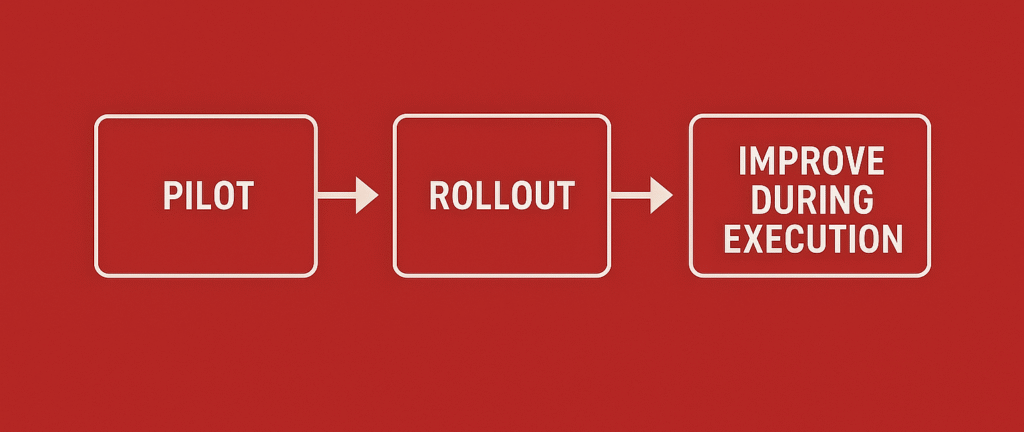
This philosophical difference is one of the core reasons why Chinese companies move faster. Action precedes analysis, and iteration precedes perfection. Chinese firms believe real-world testing reveals more than months of internal debate.
Chinese companies move faster because they prefer movement to meetings. Instead of waiting for perfect clarity, teams act now and refine later. This builds on the same execution mindset outlined in Why China Leads in Manufacturing, where speed and iteration form the backbone of China’s industrial advantage.
2. Shanzhai Culture Created a National “Rapid Iteration DNA”
Many Western observers misunderstand shanzhai as copying. In reality, it represents a system of rapid imitation → rapid improvement → rapid commercialization. This helps explain another dimension of why Chinese companies move faster.
Shanzhai created a national reflex:
- Launch early
- Gather feedback immediately
- Improve constantly
- Let competitors accelerate each other
This operating rhythm became a national habit. McKinsey notes that China’s innovation engine is “faster and more iterative than most Western counterparts.” – Innovation in China
China’s fast-moving industrial system rewards speed and punishes hesitation. That’s why Chinese companies move faster—not only in manufacturing, but also in EVs, batteries, automation, electronics, and materials.
3. Why Chinese Firms Execute Faster: Hierarchy Designed for Speed
Western leaders often assume hierarchy slows companies down. In China, hierarchy is frequently a speed accelerant.
Beneath the surface of why Chinese companies move faster, authority flows quickly:
- Decisions escalate rapidly
- Senior leaders approve fast
- Teams act without prolonged debate
- Progress doesn’t require perfect information
Chinese companies move faster because employees don’t need endless cross-functional alignment. The organizational expectation is clear:
Move now, report after.
Harvard Business Review reinforces this point, noting that Western companies often misunderstand the speed at which Chinese organizations make decisions.
This is also why decision making in China often looks slow at first, but accelerates rapidly once alignment is reached.
This structural clarity is a major reason why Chinese companies move faster than Western firms bound by consensus-driven processes.
4. Workforce Adaptability and the Collective Mindset
One of the most overlooked factors in why Chinese companies move faster is workforce adaptability.
Chinese teams demonstrate:
- High comfort with rapid change
- Pride in responding quickly to customer needs
- Flexibility during urgent orders
- Strong problem-solving cohesion
- A collective determination: “We will find a way.”
In Western plants, urgent orders often trigger debate, friction, or hesitancy. In Chinese plants, the reaction is nearly instantaneous:
“Understood. Let’s begin.”
This shared commitment to responsiveness is a powerful reason why Chinese companies move faster in day-to-day operations.
5. Government Alignment Removes Friction
China’s government–industry ecosystem accelerates execution in ways many Western leaders underestimate. This ecosystem is a structural reason why Chinese companies move faster.
- One-stop permitting
- Infrastructure built before demand
- Industrial zones clustering suppliers
- Local government support for expansion
- Reliable logistics and utilities
The World Economic Forum highlights how China’s industrial clusters increase speed and efficiency across entire supply chains.
When a Chinese company decides to scale or build new capability, the entire system accelerates rather than obstructs. That’s a core reason Chinese companies move faster at industrial scale.
6. Why Chinese Businesses Move at Unmatched Speed: Cross-Functional Execution
Unlike siloed Western structures, Chinese firms run cross-functional execution from Day 1.
A new customer request triggers synchronized action:
- R&D begins testing immediately
- Production schedules trial runs
- Purchasing sources materials in parallel
- QC adjusts testing plans
- Sales stays continuously involved
Where Western firms run serial processes, China runs parallel processes. This kind of real-time coordination is one of the key lessons from running a China joint venture, where cross-functional alignment becomes a competitive advantage rather than an operational hurdle.
In my direct experience, for example:
- New PTFE colors can be trialed and sampled within a week
- Silicone formulations can move from concept to trial in a day
- EV thermal runaway projects advance in real time
This alignment is a major reason why Chinese companies move faster in real-world execution.
7. Resource Mobilization Happens Instantly
Another hallmark of why Chinese companies move faster is their ability to mobilize resources immediately.
Chinese firms will:
- Add extra shifts
- Assign multiple engineering teams
- Source from several suppliers at once
- Reconfigure production schedules overnight
- Deploy cash quickly
In many Western companies, similar moves require lengthy approvals and budget cycles.
In China, the mentality is simple:
Speed wins. Optimization comes later.
This decisiveness is a key reason why Chinese companies move faster across industries.
8. A Different Risk–Reward Equation
Western firms often avoid:
- Operational risk
- Reputation risk
- Process deviation
- Imperfect data
Chinese companies treat these as normal features of execution. They view moving too slowly as the bigger risk.
This mindset helps explain why Chinese companies move faster:
- Opportunity > hesitation
- Action > caution
- Iteration > analysis paralysis
China’s system rewards bold movement, not prolonged deliberation.
9. Tradeoffs Exist — but Are Strategically Managed
China’s speed does come with tradeoffs:
- Early documentation may lag
- Initial versions may need refinement
- Rapid changes can strain internal systems
But these are short-term issues. Once iteration stabilizes, Chinese firms deliver:
- Consistent quality
- High throughput
- Scalable capacity
- Reliable supply
These outcomes further reinforce why Chinese companies move faster without surrendering long-term competitiveness.
10. Why Western Leaders Must Understand This Now
China’s execution speed is not the result of:
- Chaos
- Cheap labor
- Copying
- Luck
It is the result of a deliberately built operating system—cultural, organizational, and structural.
For Western leaders, understanding why Chinese companies move faster is not about imitating China. It’s about recognizing how frictionless systems, parallel execution, rapid decision-making, and cross-functional alignment create massive competitive advantages.
If you want a deeper look at the cultural foundation behind China’s fast decision cycles, see Understanding Guanxi in Business.
Because today:
Speed compounds.
Iteration compounds.
Execution compounds.
And understanding why Chinese companies move faster prepares Western organizations for the competitive realities of the next decade. For a broader look at how this speed now intersects with innovation, see China Was Built to Scale. Now It Challenges the West on Innovation.
China has mastered velocity—now the rest of the world must understand it.
Frequently Asked Questions
Before you finish reading, here are a few of the most common questions executives ask about why Chinese companies move faster—and what it means for global competitiveness.
1. Why do Chinese companies move faster than Western companies?
Chinese companies move faster because they operate with fewer approval layers, empower frontline teams to act immediately, and prioritize execution over internal debate. Speed is treated as a competitive advantage, and momentum often matters more than perfect planning.
2. How do Chinese companies make decisions so quickly?
Decision-making accelerates once leadership signals direction—often implicitly. Teams align rapidly through informal discussions, relationship-based trust, and a shared understanding that quick action is expected. Alignment happens outside formal meetings, enabling faster execution.
3. What cultural factors contribute to China’s business speed?
Chinese business culture emphasizes flexibility, pragmatism, and efficiency. Managers are comfortable acting with incomplete information, adjusting direction on the fly, and removing process barriers that slow progress. This creates an instinctive bias toward rapid execution.
4. Why do Western companies struggle to match this speed?
Western companies rely on structured processes—risk reviews, documentation cycles, and multiple layers of approval—that slow responsiveness. These systems protect quality and mitigate risk, but they also create delays that are unsustainable in China’s high-velocity markets.
5. How do Chinese companies innovate so quickly?
Chinese companies innovate by launching early, testing directly in the market, and improving through fast iteration cycles. Instead of perfecting a product before release, they evolve it in real time based on customer feedback, allowing them to stay ahead of competitors.
Enjoying this?
Get weekly, real-world insights on China joint ventures and China manufacturing.