
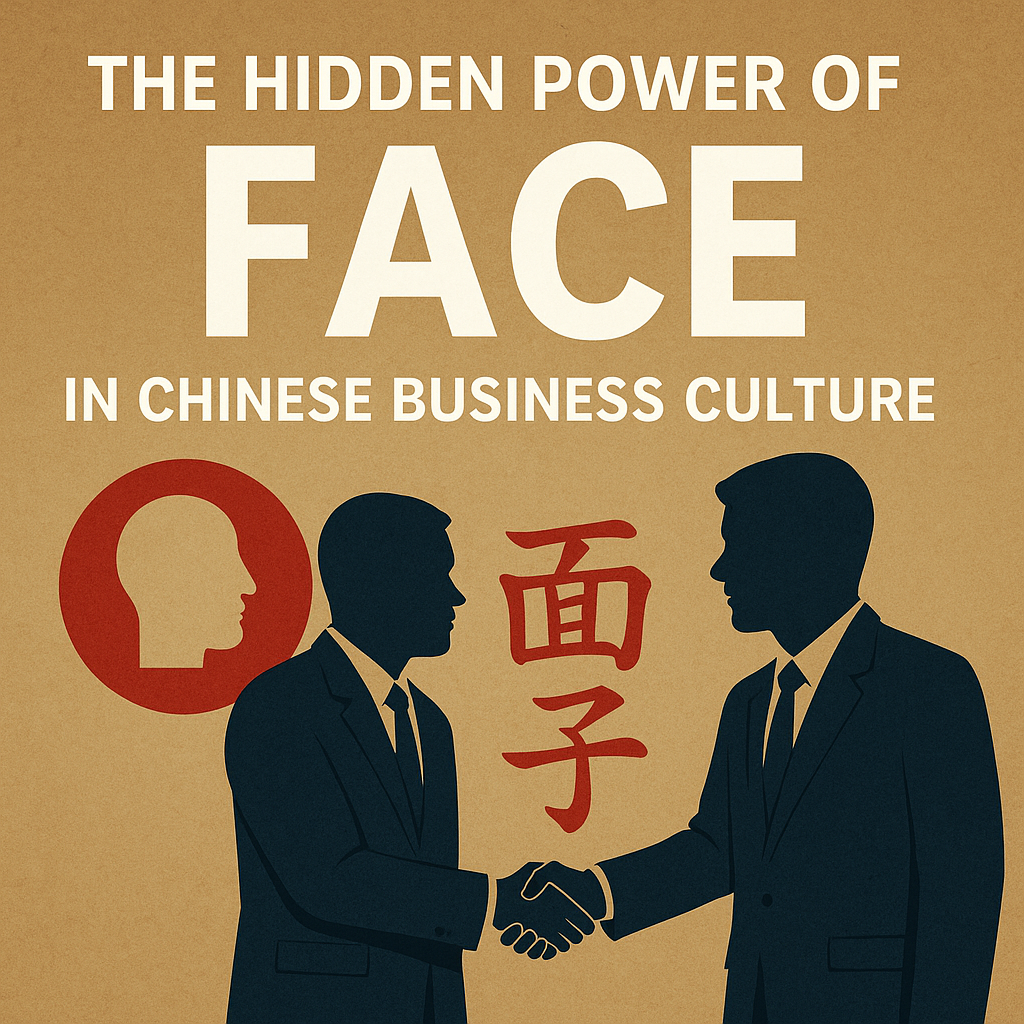
Why “Face” (Mianzi) Shapes Every Deal, Every Meeting, and Every Decision
If you do business in China long enough, you eventually learn that technical expertise and financial logic alone are not enough. Deals stall for reasons that seem invisible. Emails go unanswered. A promising meeting suddenly turns cold.
Often, the real reason is Face—or mianzi—one of the most powerful, and most misunderstood, forces in Chinese business relationships. Even respected global publications emphasize this. Face in Chinese business culture is critical. One Harvard Business Review analysis highlights how face-saving is a foundational principle in Asian business relationships, impacting how people give feedback, share concerns, and make commitments.
(Source: https://hbr.org/)
Face is not about vanity. It is about status, dignity, trust, and social harmony. And when you learn to manage it correctly, you unlock smoother negotiations, deeper relationships, and far more predictable business outcomes.
1. What Face Actually Means (Beyond the Textbook Definition)
Face is your perceived standing in the eyes of others. It is the combination of:
- Reputation
- Professional competence
- Social value
- Respect you give
- Respect you receive
In Western business, transparency and blunt honesty are usually rewarded.
In China, the ability to protect your counterpart’s dignity is equally important as the substance of your message. Learning how to use Face in Chinese business culture is a required skill.
Lose someone’s Face, and you lose the deal.
Give someone Face, and you gain long-term allies.
2. Why Face Shapes Every Business Discussion in China
Face drives decisions in ways Western executives often overlook. To understand face in Chinese business culture, you must see it as a decision-making filter, not a cultural footnote. It guides how people communicate, what they reveal, and how quickly they move toward agreement.
A McKinsey & Company study reinforces this by explaining that leaders in high-context cultures often prioritize harmony, hierarchy, and reputation over speed or confrontation—especially during negotiations.
(Source: https://www.mckinsey.com/)

3. How Losing Face in Chinese Business Culture Kills Deals Quickly
Here are the classic mistakes Western managers make:
❌ Correcting someone publicly during a meeting
❌ Showing frustration or impatience
❌ Asking a junior employee to challenge their manager
❌ Pushing for a “yes/no” answer on the spot
❌ Treating hierarchy too casually
❌ Making the other party admit fault openly
Even if the technical points are correct, the tone destroys cooperation.
4. How to Give Face: The Most Valuable Skill in China
Here is what actually works:
1. Praise publicly, correct privately.
This is the golden rule. A private correction preserves harmony and allows people to re-engage confidently.
2. Let the other side “own” good ideas.
If you propose a solution, phrase it so that they are the champion of it.
3. Respect hierarchy intentionally.
Speak to the senior leader first, even if the technical expert is the true decision-maker. This is one of the most powerfully ingrained culture practices in China.
4. Provide exits that save dignity.
If a project, price, or plan cannot work, the explanation should protect reputations, not assign blame.
5. Create a path where both sides “win.”
Face is restored when both sides appear capable, respected, and competent.
This is how Chinese partners evaluate trust.
5. Real-World Examples of How Face Plays Out
These examples highlight how deeply face in Chinese business culture influences communication patterns. What seems confusing or indirect to Western executives often makes perfect sense once you understand that avoiding embarrassment is more important than giving the most technically accurate answer.
A MIT Sloan Management Review report on cross-cultural negotiation explains that indirect communication styles—such as silence, vague agreement, or soft disagreement—protect relationships and reduce conflict, especially in East Asian contexts.
(Source: https://sloanreview.mit.edu/)
6. How Face Connects to Long-Term Trust
Face is not manipulation. It is respect.
When you manage Face well:
- Meetings flow smoothly
- Negotiations stay collaborative
- Partners advocate for you internally
- Problems are communicated more honestly
- You become a preferred long-term partner
Face is the foundation of relationships in China. Many misunderstandings around Face show up as common mistakes. I break down those patterns here: Common Mistakes Foreign Executives Make in China.
Even Forbes notes that modern Chinese business culture still relies heavily on Guanxi, reputation, and face-saving behaviors, especially in long-term supplier and customer relationships.
(Source: https://www.forbes.com/)
7. The Face Strategy Toolkit (Use This Daily)
Here is a practical checklist you can apply immediately:
✔ Before Meetings
- Understand who the true decision-makers are
- Avoid putting anyone in a position where they may need to admit fault
✔ During Meetings
- Praise contributions publicly
- Keep difficult or corrective feedback for private follow-up
- Frame disagreements as “alternative perspectives”
✔ After Meetings
- Send a respectful summary
- Give credit to the other party in writing
- Provide options, not ultimatums
If you want to go deeper into how Chinese executives evaluate integrity and trustworthiness, see my article Building Lasting Trust in China — it expands on how trust is earned, protected, and grown through repeated positive interactions.
Mastering face in Chinese business culture is not about being overly cautious — it’s about being strategically respectful. When you adjust your approach even slightly, internal doors open, resistance falls away, and partnership momentum increases dramatically.
Final Thoughts
The most successful foreign executives in China are not the ones with the best PowerPoints, the best pricing models, or the best technology.
They are the ones who understand how to balance:
- Truth with tact
- Directness with diplomacy
- Results with relationships
- Transparency with Face
If you’d like additional tools or frameworks that support cross-cultural leadership, negotiation, or JV management, my Resources page includes guides that may be helpful.
Master Face—and the entire business environment becomes far more predictable, cooperative, and successful.
PS — Join the Newsletter
If you’d like future articles like this delivered directly to your inbox, you’re welcome to join my free weekly newsletter on Substack:
https://jvchina.substack.com/