
Most Western executives walk away from business dinners in China feeling cautiously optimistic.
The meeting went smoothly.
The dinner was relaxed.
There was laughter, toasts, and polite warmth.
It feels like progress.
But in China, that dinner rarely moves the decision forward. More often, it marks the point where your direct involvement pauses and internal evaluation begins. Understanding what those dinners really signal, and what happens afterward, is critical if you want momentum instead of silence.
What Business Dinners in China Actually Represent
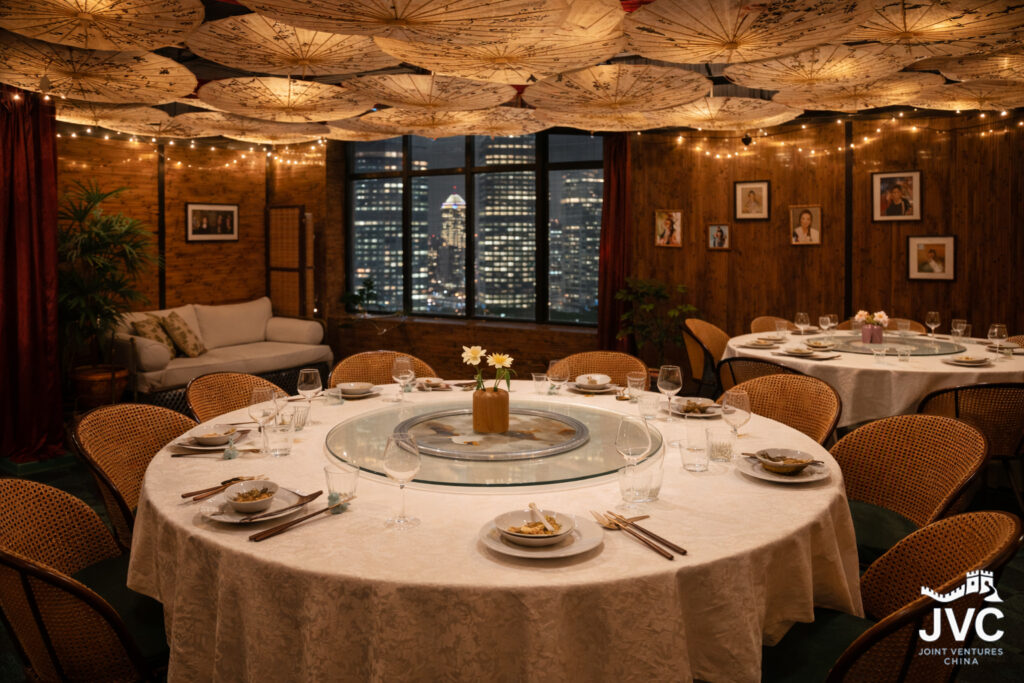
Business dinners in China are formal, hosted meals tied to hierarchy and intent. They are usually small, often held in private rooms, and hosted by the senior side.
They are sometimes translated as “banquets,” but in practice they are simply hosted business dinners, not large celebrations.
The purpose is not negotiation.
It is not celebration.
And it is not decision-making.
It is observation, alignment, and trust building.
Why Decisions Do Not Happen During Business Dinners in China
Nothing meaningful gets decided at the table for a simple reason: alignment has not happened yet.
Chinese decision-making is sequenced, not spontaneous. Meetings create exposure, dinners create observation, and decisions happen later once internal consensus forms. This pattern mirrors what happens in meetings themselves, where decisions don’t happen in the meeting, but only after internal alignment forms.
Warmth at dinner is safe. Commitment is not.
During dinner:
- Key stakeholders are not present
- Internal consensus has not formed
- Public agreement would create unnecessary risk
Chinese organizations avoid committing before internal alignment because reversing course later damages trust internally. This is why a pleasant dinner followed by quiet days or weeks is not a contradiction. It is the normal sequence.
What Is Being Observed at the Dinner
Although the tone is relaxed, business dinners in China are not casual.
Chinese teams are watching:
- How you handle hierarchy
- Whether your behavior is consistent with the meeting
- How predictable you are under relaxed conditions
- How you treat people who cannot make decisions
This mirrors what happens when Western teams misread silence after meetings. What looks like disengagement is often internal risk management, which is why silence isn’t disengagement in China. It is part of sequencing before things accelerate in business.
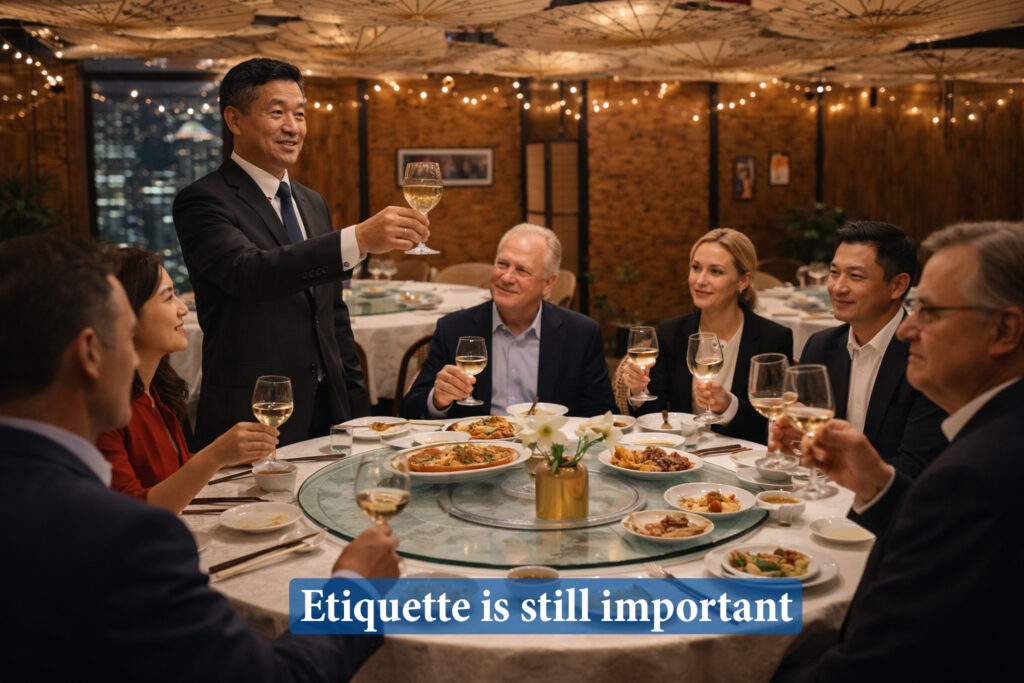
Chinese business etiquette matters here. Seating, pouring order, restraint, and respect are not small details. They are signals about whether you understand hierarchy, patience, and the rhythm of the relationship.
Getting these wrong can raise immediate red flags. They also help explain why Chinese teams often avoid visible disagreement even when concerns still exist.
But etiquette at business dinners in China is still the baseline. It keeps you from being ruled out. It does not, by itself, move things forward.
Why Familiarity Can Be Misleading
One of the reasons business dinners in China confuse experienced Western operators is that they often feel familiar.
You may have had similar dinners dozens of times.
You may know the rhythm.
You may even know some of the people well.
That familiarity can create a false sense of closure.
In China, familiarity reduces social friction, but it does not replace alignment. A relaxed atmosphere does not mean the risk assessment phase has ended. In fact, it often means the opposite. The more familiar the interaction becomes, the more weight is placed on whether your behavior remains consistent and predictable over time.
This is why teams that rely on personal rapport alone often stall unexpectedly. Comfort is helpful. It is not decisive.
Why Internal Sponsors Matter More Than the Dinner
One of the biggest mistakes Western teams make is assuming they remain the primary advocates for their proposal after the dinner ends.
In reality, the opposite is usually true.
Once you leave, the conversation increasingly belongs to the people inside the organization who now have to explain your proposal, answer questions, address concerns, and determine whether supporting it creates unnecessary risk.
Successful Chinese decision making depends on whether internal stakeholders can build alignment without creating unnecessary exposure for themselves or others.
Experienced operators understand that the objective before leaving the dinner is not simply to make a persuasive presentation. It is to leave internal sponsors with enough confidence, clarity, and supporting information that they can carry the discussion forward after you are no longer in the room.
This is one of the least understood aspects of doing business in China. The strongest advocate for your proposal is often no longer you. It is the person inside the organization who must quietly build support before any visible commitment can be made.
Executive Insight
Business dinners in China rarely produce the final decision. More often, they determine whether someone inside the organization is willing to champion your proposal after you leave. Recognizing that transition is one of the biggest competitive advantages Western executives can develop when doing business in China.
What Happens After the Dinner Is What Really Matters
The real decision window opens after you leave.
This is when:
- Notes are shared internally
- Your behavior is discussed
- Risk is evaluated internally
- Internal alignment starts forming
This is also why periods of silence immediately after a successful dinner should not automatically be interpreted as a lack of interest. In many organizations, Chinese decision making continues through conversations that happen privately among stakeholders who were never present at the table. Those discussions determine whether your proposal gains momentum, requires additional clarification, or quietly loses support. Understanding this sequence is one of the most important lessons for executives doing business in China.
The questions being asked internally are rarely about the food or the conversation. They are about you.
Are you steady?
Are you predictable?
Do you respect process?
Will you create pressure later?
Momentum forms here quietly, or it disappears just as quietly.
The Common Western Mistake After a “Good” Dinner
Western teams often make the same assumption after a successful business dinner in China.
The conversation flowed.
The atmosphere was relaxed.
Everyone appeared engaged.
It feels like the relationship has crossed an important threshold.
In reality, that positive experience often marks the beginning of the most important phase rather than the end of it. The dinner itself rarely provides confirmation that a decision has been made. It simply provides the organization with enough information and confidence to begin evaluating the opportunity internally.
Typical mistakes include:
- Immediate follow-up emails
- Pushing next steps too quickly
- Referencing how well the dinner went
- Asking for confirmation too soon
From a Western perspective, these actions feel proactive. From a Chinese perspective, they can unintentionally introduce pressure before internal alignment is complete.
The result is rarely immediate rejection. More often, it simply makes it harder for your internal sponsors to continue building support at their own pace.
Business dinners in China are designed to create familiarity, build trust, and reduce uncertainty. That is also why Western executives frequently misread confidence during these interactions. They are not the point where organizations commit. Understanding that distinction is one of the most valuable lessons for executives working across cultures.
How Experienced Operators Handle the Post-Dinner Phase
Experienced operators understand that restraint is not passivity.
After business dinners in China, they:
- Slow their follow-up
- Keep communication minimal and predictable
- Allow internal discussions to unfold
- Avoid forcing momentum
This is especially visible when you understand why what happens after the meeting matters more than the meeting itself.
This signals respect for sequence. And in China, sequence determines speed.
Why This Is About Speed, Not Social Etiquette
China does not move slowly because of culture. It moves deliberately until alignment is achieved, and then it moves very fast.
Business dinners in China help determine whether that alignment is worth pursuing. They are part of the filtering process, not the execution phase.
Western teams often confuse activity with progress. Chinese teams separate the two.
Final Thought
A good business dinner in China is not the conclusion of anything.
It is the handoff.
If nothing seems to be happening after a successful business dinner, that is often when the real work has finally started.
That is also why follow-up in China matters more than the meeting itself.
Enjoying this Insight?
Get weekly real-world insights on Chinese business culture, joint ventures, and China manufacturing.

About the Author — Kevin Burton
Kevin Burton is the General Manager of a China joint venture company manufacturing advanced fiberglass materials for industrial thermal protection systems and EV safety applications. He writes about Chinese business culture, joint venture governance, and how Western leadership assumptions often collide with China’s execution-driven operating systems.