
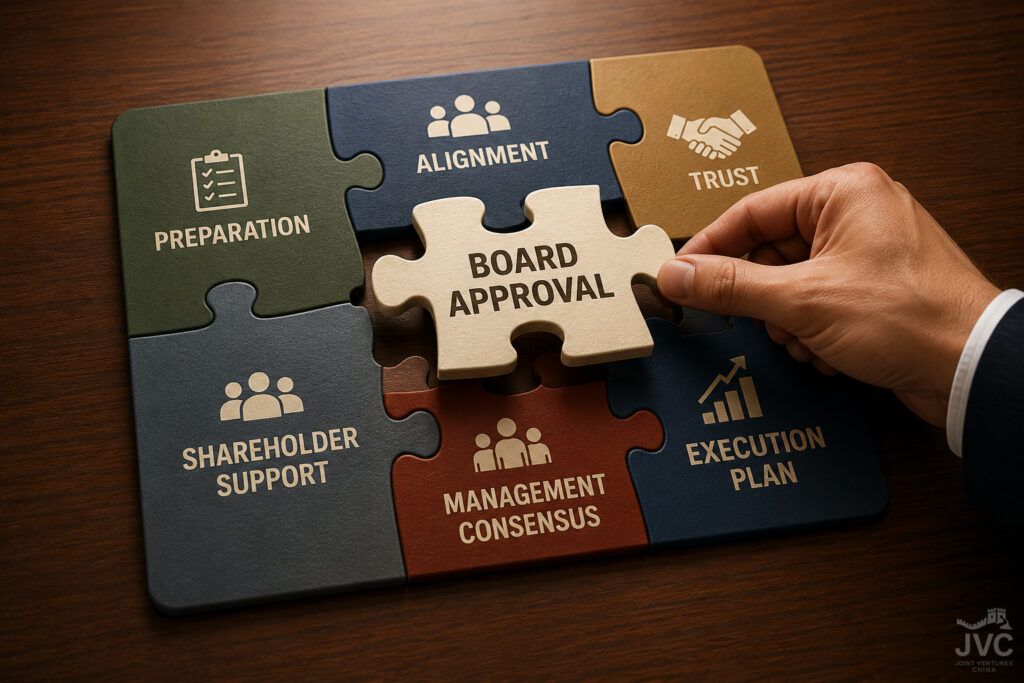
For many Western executives, accepting a seat on a China joint venture board represents the culmination of months or even years of negotiation. Expectations are naturally high. The Board meeting is viewed as the place where competing ideas will be debated, difficult issues will be resolved, and the future direction of the company will be determined. It is the same governance model they have experienced throughout their careers in North America or Europe.
Then they attend their first China joint venture board meeting.
The agenda moves surprisingly quickly. Directors rarely challenge one another publicly. Most resolutions receive unanimous approval with little discussion. Votes seem almost procedural. By the end of the meeting, many foreign directors are left wondering whether the important conversations ever happened at all.
In many successful ventures, they did—but not in the Board meeting itself.
Understanding how a China joint venture board actually functions is one of the most valuable lessons a Western executive can learn. It changes how directors prepare, how they communicate with shareholders, and ultimately how they build influence. Instead of measuring effectiveness by the amount of debate inside the boardroom, experienced directors recognize that the real work often occurs long before anyone takes a seat around the conference table.
This surprises many first-time directors because it challenges decades of experience with Western corporate governance. Yet once this different operating model becomes clear, Chinese board meetings begin to make much more sense. Rather than viewing them as passive or ineffective, directors begin to recognize them for what they are: the final step in a much longer process of alignment.
What Is a China Joint Venture Board?
A China joint venture board is the highest governing body of a jointly owned company established between Chinese and foreign shareholders. Depending on the ownership structure, directors are appointed by the respective shareholders and are responsible for major strategic decisions, approving budgets, capital investments, senior management appointments, and other significant matters affecting the business.
From a legal perspective, the responsibilities of a China joint venture board may look familiar to Western executives. The Board possesses formal authority, establishes governance, and provides strategic oversight. The mechanics appear similar to many multinational corporations.
The practical application of that authority, however, often differs substantially.
In many Western companies, directors expect the Board meeting itself to be the primary venue for discussion, persuasion, and decision making. In contrast, many Chinese board meetings serve primarily to formalize decisions that have already been extensively discussed, refined, and aligned through management teams, shareholder representatives, and informal conversations before the meeting is ever convened.
Recognizing this distinction is essential for understanding effective joint venture governance. It also explains why experienced foreign directors often prepare very differently than directors participating in purely Western organizations.
What Western Directors Expect a Board to Do
Most Western executives arrive with a mental model shaped by decades of experience serving on corporate boards, executive committees, or public company governance structures. They expect directors to arrive with independent opinions, present competing recommendations, challenge management assumptions, and openly debate alternatives before reaching a final decision.
Within this framework, disagreement is healthy. Strong directors ask difficult questions, expose weaknesses in proposals, and improve decisions through discussion. A productive meeting is frequently measured by the quality of debate that takes place around the table.
That expectation influences how many foreign directors prepare for Chinese board meetings. They spend considerable time developing arguments, anticipating objections, and preparing presentations designed to persuade fellow directors during the meeting itself. When the meeting begins and those opportunities never materialize, frustration often follows.
The absence of visible debate can easily be mistaken for disengagement. Directors sometimes conclude that management is withholding information, that decisions have already been predetermined, or that the Board is failing to fulfill its responsibilities.
Those conclusions are understandable, but they are often incomplete.
The issue is usually not that the Board lacks authority. Instead, it reflects a different philosophy of joint venture governance—one that seeks to minimize public disagreement after extensive private alignment has already occurred.
Understanding that distinction changes everything about how effective directors operate.
How China Joint Venture Boards Actually Work
One of the defining characteristics of many successful China joint venture boards is that the most important work occurs before the formal meeting begins.
Complex issues frequently move through multiple stages of discussion involving management teams, functional leaders, shareholder representatives, and senior executives. Questions are raised, concerns are addressed, financial impacts are evaluated, and alternatives are considered well in advance of the official Board agenda.
By the time directors gather, much of the uncertainty has already been resolved.
This process should not be confused with secrecy or manipulation. Rather, it reflects a preference for reducing unnecessary conflict inside formal governance meetings. When directors arrive with a shared understanding of the issues, the Board can focus on confirming strategic alignment and authorizing execution rather than negotiating every detail in public.
For Western executives, this often feels unfamiliar because the visible portion of the decision-making process appears surprisingly short. Yet what appears to be a brief meeting may actually represent weeks of preparation involving numerous conversations across multiple organizations.
This pattern is particularly common when the shareholders have established strong working relationships over many years. In those circumstances, joint venture governance becomes less about public persuasion and more about disciplined preparation.
That preparation also explains why Chinese board meetings frequently appear highly organized. Agenda items move efficiently because the difficult conversations have already occurred. Directors understand the recommendations before arriving, and management has already incorporated feedback from the principal stakeholders.
From the outside, the meeting may appear almost ceremonial.
From the inside, however, it represents the successful completion of a lengthy alignment process.
Why Decisions Are Often Made Before the Meeting
To many Western observers, making decisions before the Board meeting sounds inefficient or even contrary to good governance. In reality, it often serves several practical purposes.
First, alignment before the meeting reduces execution risk.
Once a major investment, expansion project, or strategic initiative has been approved by the China board of directors, management must execute quickly and confidently. Discovering fundamental disagreements during the meeting can delay implementation, create uncertainty among employees, and undermine confidence in leadership.
Second, pre-meeting alignment helps preserve constructive relationships among shareholders.
Joint ventures operate through ongoing cooperation rather than one-time transactions. Public disagreement between shareholder representatives can sometimes create lasting tension that extends far beyond a single agenda item. Addressing sensitive issues privately allows participants to explore alternatives without placing individuals in positions where they must publicly defend or reverse earlier positions.
Third, preparation improves decision quality.
When management teams know the likely concerns of individual directors in advance, they have time to gather additional data, revise financial projections, or develop alternative recommendations before formal approval is requested. Instead of reacting under pressure during Chinese board meetings, directors receive more complete information and better-developed proposals.
Perhaps most importantly, this approach reflects a broader characteristic of Chinese management systems: visible speed is often created through invisible preparation.
Many Western executives associate fast execution with rapid decision making. In reality, Chinese organizations frequently invest considerable effort creating alignment before action begins. Once consensus has been established, implementation can move with remarkable speed because the organization is already united behind the decision.
This same pattern appears repeatedly across Chinese business culture. It explains why meetings frequently seem shorter than expected, why implementation often begins immediately afterward, and why disagreement is less visible during formal governance sessions.
Readers who have observed similar dynamics throughout Chinese organizations will recognize the same principles discussed in our exploration of why Chinese teams avoid visible disagreement, where preserving alignment frequently takes precedence over public debate. Likewise, the remarkable execution described in our discussion of why Chinese companies start doing while others continue searching for answers begins with this same emphasis on preparation before action.
What Chinese Board Meetings Are Actually For
Once directors understand how preparation shapes decision making, the purpose of Chinese board meetings becomes much clearer.
Their primary function is rarely to create consensus from scratch. Instead, they validate the consensus that has already been developed.
That distinction is subtle but profound.
Formal Board meetings provide the legal framework through which shareholder authority is exercised. Resolutions are recorded. Votes are documented. Responsibilities are assigned. Strategic direction receives official approval.
Those governance functions remain essential.
What differs is the sequence.
Rather than using the meeting to discover whether agreement exists, the meeting frequently confirms that agreement has already been achieved.
Experienced participants therefore judge the success of Chinese board meetings differently than many Western executives. A meeting that concludes quickly with unanimous approval is not necessarily superficial. In many cases, it indicates that the directors, management teams, and shareholders invested substantial effort before the meeting to resolve concerns privately and develop recommendations everyone could support.
From that perspective, efficiency inside the boardroom reflects effectiveness outside the boardroom.
Many foreign directors initially mistake this efficiency for a lack of engagement. Over time, however, they recognize that the meeting itself represents only the visible tip of a much larger governance process. The real influence, the difficult conversations, and the meaningful collaboration have already taken place, allowing the Board to fulfill its responsibilities with confidence and clarity.
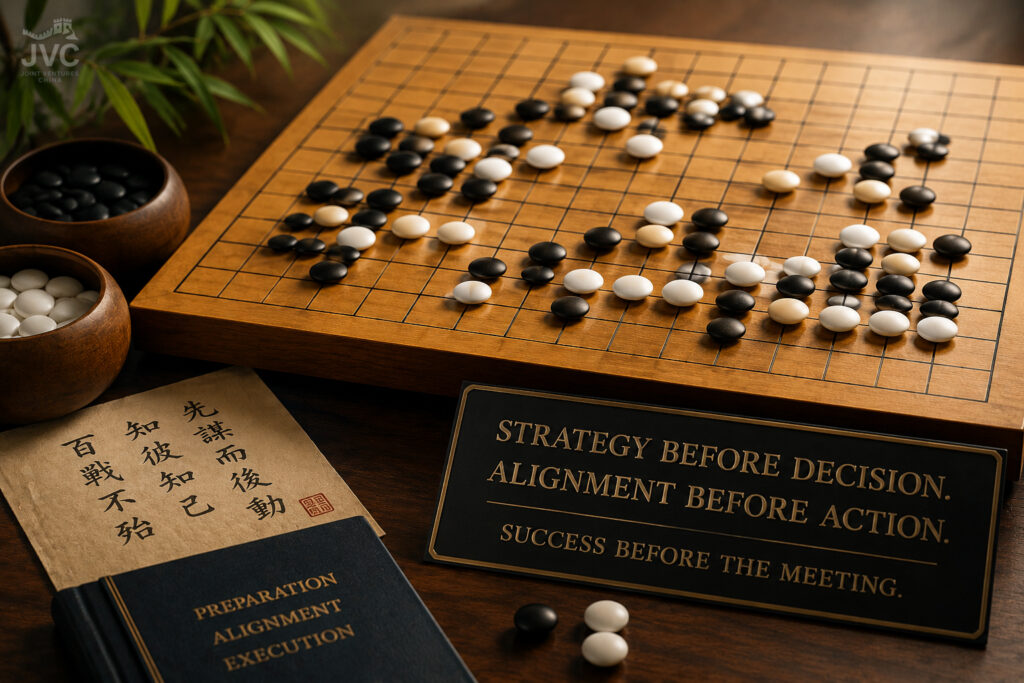
Why Western Directors Become Frustrated
Many foreign directors leave their first few Board meetings with a sense that something is missing. They expected vigorous discussion and instead observed a series of resolutions that appeared to pass almost effortlessly. Important topics seemed to receive only a few minutes of discussion, while the meeting concluded far earlier than anticipated.
It is easy to interpret this experience as evidence that the Board is disengaged or that meaningful decisions are being made elsewhere without proper governance. In reality, both observations may contain part of the truth while still missing the larger picture.
The first frustration often comes from believing that influence should occur inside the meeting itself. A director prepares detailed arguments, anticipates counterpoints, and expects an opportunity to persuade fellow Board members. When no debate develops, those preparations appear unnecessary.
The second frustration is the perception that every vote is predetermined. From a Western perspective, unanimous decisions may suggest that the Board is simply approving management recommendations without exercising independent judgment. Yet unanimous voting often reflects the opposite. It can indicate that directors have already exercised considerable judgment before the meeting and resolved outstanding concerns through private discussions.
Another common misconception arises when foreign directors observe that Chinese board meetings rarely contain the spontaneous exchanges they are accustomed to seeing elsewhere. Public disagreement is minimized because participants generally prefer to preserve alignment once formal proceedings begin. That preference should not be interpreted as a lack of independent thinking. It simply reflects a different approach to presenting decisions after they have been carefully developed.
These experiences can create unnecessary frustration if directors evaluate every meeting through the lens of Western governance expectations. Once they understand the rhythm of Chinese board meetings, many begin shifting their attention away from what happens during the meeting and toward the conversations that occur beforehand.
That realization is similar to understanding why foreign directors sometimes lose influence over time. Influence is rarely determined by how forcefully someone speaks during a formal meeting. Instead, credibility grows through consistent relationships, thoughtful preparation, and constructive engagement before important decisions ever reach the Board agenda.
Executive Insight
A quiet Board meeting is not necessarily evidence of weak governance. In many successful joint ventures, it is evidence that the difficult conversations have already taken place.
How Experienced Directors Build Influence
If influence is not created primarily during the Board meeting, where does it come from?
The answer surprises many executives.
Experienced directors invest as much time between meetings as they do preparing for the meetings themselves. They build trust with management, maintain regular communication with shareholder representatives, and seek to understand concerns while proposals are still evolving rather than waiting until formal approval is requested.
This approach does not reduce the importance of the Board. It increases its effectiveness.
Directors who understand the broader governance process ask better questions because they appreciate the work already completed. Rather than reopening every issue from the beginning, they focus on identifying genuine strategic risks, testing important assumptions, and ensuring that the organization remains aligned with shareholder objectives.
Strong relationships also improve information quality. Management teams become more willing to discuss emerging challenges before they become crises. Shareholder representatives share concerns earlier in the process. Directors receive greater context behind recommendations instead of reviewing only polished presentations.
That is where meaningful joint venture governance develops.
Experienced foreign directors also recognize that credibility is cumulative. Publicly surprising management with objections during Chinese board meetings may occasionally be necessary, but doing so routinely can reduce trust and make future collaboration more difficult. Raising significant concerns privately before the meeting often produces stronger outcomes because management has time to investigate the issue, gather additional facts, or adjust the recommendation before formal approval is requested.
None of this suggests that directors should avoid asking difficult questions. Effective governance depends upon thoughtful oversight. The difference lies in understanding when and where those questions create the greatest value.
Directors who consistently contribute to better preparation become trusted advisors rather than occasional critics. Over time, they discover that influence grows less from dramatic moments inside the boardroom and more from disciplined engagement throughout the governance process.
Executive Insight
The most influential directors often speak the least during formal Board meetings because their influence has already shaped the discussion long before the meeting begins.
Signs Your China Joint Venture Board Is Functioning Well
Western executives often evaluate Boards by the energy inside the meeting. A lively discussion with competing viewpoints may feel productive because everyone is visibly participating.
The opposite can sometimes be true in a mature China joint venture board.
When directors arrive well prepared, management has addressed major concerns, and shareholders remain aligned, the meeting itself may appear remarkably efficient. Agenda items move quickly because participants already understand both the recommendations and the reasoning behind them.
Several characteristics frequently indicate that joint venture governance is functioning effectively.
First, directors receive information well before the meeting. There is adequate time to review financial data, operational updates, and strategic proposals. Questions begin long before directors gather around the conference table.
Second, management demonstrates a willingness to revise recommendations after receiving feedback. This shows that consultation occurred before formal approval rather than after the fact.
Third, Chinese board meetings conclude with clear responsibilities and immediate execution. Once resolutions are approved, the organization moves forward confidently because major stakeholders have already committed to the chosen direction.
Finally, relationships among directors remain constructive even when difficult decisions must be made. Respectful disagreement certainly exists, but it is generally resolved through discussion and preparation rather than public confrontation during formal proceedings.
The opposite pattern deserves attention as well. When issues repeatedly return without resolution, shareholder positions harden, or pre-meeting alignment stops producing executable decisions, the board may be moving toward China joint venture deadlock. The warning sign is not simply disagreement; it is disagreement beginning to interfere with the company’s ability to make and implement decisions.
These characteristics may not produce dramatic Board meetings, but they often produce effective organizations.
This broader pattern also explains why organizational hierarchy contributes so significantly to execution speed. Once alignment has been achieved across leadership levels, decisions move through the organization with remarkable consistency because everyone understands both the direction and the reasons behind it.
Why This Matters Beyond the Boardroom
Understanding how a China board of directors operates has implications far beyond governance itself.
Executives who recognize the importance of alignment begin communicating differently throughout the organization. They involve key stakeholders earlier, anticipate concerns before proposals are finalized, and spend more time building consensus than preparing presentations.
Continue Learning About China Joint Venture Leadership
If you’re responsible for leading, governing, or working within a China joint venture, understanding how decisions are really made is only one part of building long-term success.
Explore our related articles on China joint venture governance, Chinese business hierarchy, leadership influence, and business culture to better understand how governance, relationships, and execution work together inside successful partnerships.
These habits improve execution because implementation begins with stronger organizational commitment.
The same principles apply throughout Chinese business culture. Whether negotiating partnerships, managing operations, introducing new products, or leading cross-cultural teams, successful leaders invest heavily in preparation before expecting rapid execution.
For Western organizations, this can initially feel slower than expected. In reality, it often produces faster implementation because fewer issues remain unresolved after decisions have been announced.
This distinction explains why organizations that appear deliberate during planning frequently become extraordinarily fast during execution.
Ultimately, successful joint venture governance depends on far more than legal documents. As many executives eventually discover, good governance requires more than strong contracts – it requires alignment, trust, preparation, and consistent communication between shareholders.
Once foreign executives recognize this pattern, Chinese board meetings become easier to interpret. Instead of asking why nobody debated during the meeting, they begin asking what conversations occurred beforehand to make that level of agreement possible.
That question usually leads to much deeper insights into how successful joint ventures actually operate.
Conclusion
A China joint venture board should not be evaluated solely by what happens during the formal meeting. The meeting itself is only one visible step within a much larger governance process.
Western directors often arrive expecting debate to create decisions. In many successful joint ventures, decisions are created through preparation, consultation, and alignment before they ever reach the Board agenda. Formal approval then confirms that the necessary work has already been completed.
Understanding this difference transforms the way foreign executives participate in joint venture governance. Instead of concentrating all their efforts on the meeting itself, they begin building relationships, engaging stakeholders earlier, and contributing to stronger preparation across the organization.
That shift does more than improve individual Board performance. It strengthens trust among shareholders, improves communication with management, and creates an environment where execution can begin immediately after decisions are formally approved.
The most effective China joint venture board is not necessarily the one with the longest meetings or the loudest debates. More often, it is the one where preparation has been so thorough that formal approval becomes the natural conclusion of an alignment process that began weeks earlier.
Once directors understand that principle, Chinese board meetings stop looking unusually quiet. They begin looking remarkably effective.
Frequently Asked Questions
What does a China joint venture board actually do?
A China board of directors serves as the highest governing authority of the joint venture, approving major strategic decisions, investments, budgets, and executive appointments. While it possesses formal legal authority, many important decisions have already been aligned before they are presented for approval.
Why do Chinese board meetings often seem so short?
Chinese board meetings are frequently efficient because directors, management, and shareholder representatives have already discussed major issues beforehand. The formal meeting focuses on confirming alignment and recording official decisions rather than beginning negotiations.
Who really controls a China joint venture?
Who really controls a China joint venture depends on the joint venture agreement, ownership structure, Board composition, and relationships among shareholders. Formal authority is important, but influence is often built through preparation, communication, and trust rather than voting alone.
Why isn’t there more debate during Chinese board meetings?
Many Chinese organizations prefer resolving disagreements privately before formal meetings. This approach reduces uncertainty, preserves working relationships, and allows the organization to execute quickly after decisions receive official approval.
How can foreign directors become more influential?
The most effective directors build relationships outside formal meetings, engage stakeholders early, understand shareholder priorities, and contribute to stronger preparation before important issues reach the Board. Influence is usually earned through consistent engagement rather than public debate.
For additional perspectives on effective corporate governance and Board leadership, the National Association of Corporate Directors (NACD) provides valuable governance resources and research for directors around the world: https://www.nacdonline.org/
Enjoying this Insight?
Get weekly real-world insights on Chinese business culture, joint ventures, and China manufacturing.

About the Author — Kevin Burton
Kevin Burton is the General Manager of a China joint venture company manufacturing advanced fiberglass materials for industrial thermal protection systems and EV safety applications. He writes about Chinese business culture, joint venture governance, and how Western leadership assumptions often collide with China’s execution-driven operating systems.