
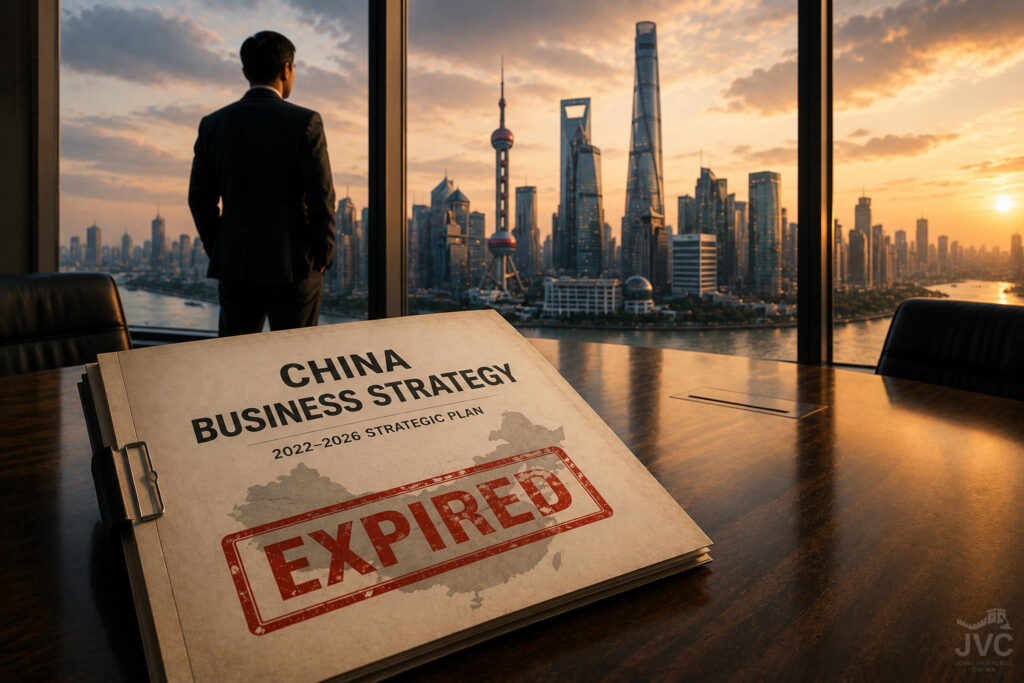
When a multinational company’s performance in China begins to decline, the explanation usually sounds familiar. Executives point to slowing economic growth, changing regulations, stronger local competitors, rising labor costs, or shifting customer expectations. All of those factors may be true. China today is very different from the China of five, ten, or twenty years ago. But after nearly two decades working in China and leading a China joint venture, I have found that those external changes are often only half the story. The more important question is whether the company has changed along with the market.
China has never been a static business environment. Markets mature. Industries consolidate. Consumer preferences evolve. Government priorities shift. Local competitors improve. Technology changes how companies sell, manufacture, and communicate. None of this should surprise anyone doing business in China. What does surprise me is how many organizations continue operating with a China business strategy built for a market that no longer exists.
Successful companies do not assume their original strategy will carry them indefinitely. They recognize that every strategy has a shelf life. They continuously challenge their assumptions, adjust their priorities, and refine how they compete. Organizations that struggle often do the opposite. They continue executing yesterday’s plan while believing tomorrow’s results will somehow improve.
The real problem is not that China changed.
The real problem is that the strategy did not.
China Never Stops Changing
One of the biggest mistakes I see is treating a China business strategy like a document that is completed, approved by headquarters, and then placed on a shelf. In reality, strategy should behave more like a navigation system. Every time the road changes, the route should be recalculated.
When many Western companies first entered China, success often depended on technology advantages, manufacturing expertise, foreign brand recognition, or access to international customers. Those advantages were meaningful at the time. Today, many Chinese companies compete on innovation, product quality, speed of execution, digital integration, and customer responsiveness. The competitive landscape has evolved dramatically.
Yet I still encounter organizations using assumptions developed years earlier. Their sales channels remain unchanged while customers buy differently. Their approval processes remain slow while competitors make decisions in days. Their product roadmap reflects yesterday’s market instead of tomorrow’s opportunity. None of these decisions are intentionally wrong. They simply become outdated because the business continued following a China business strategy that was never designed for today’s environment.
One reason this happens is that organizations often mistake consistency for stability. Markets can appear stable on the surface while competitive dynamics, customer expectations, and decision-making patterns are changing underneath. Leaders who assume that “nothing has really changed” are often the last to recognize that their competitive position has already shifted.
That is why I encourage executives to stop asking whether China has changed. The answer is always yes. The better question is whether their own organization has changed at the same pace.
The Leadership Trap
It is tempting for leadership teams to view declining performance as an external problem. Markets become more competitive. Customers become more demanding. Regulations become more complex. Those explanations feel objective because they point outside the organization.
The more difficult conversation asks what assumptions the leadership team has failed to revisit.
Great leaders understand that a China market strategy is not about defending past decisions. It is about continuously testing whether those decisions still fit current conditions. That requires humility because it means acknowledging that a strategy which produced outstanding results five years ago may now be limiting future growth.
I have seen leadership teams invest enormous effort refining execution while never questioning whether they were executing the right strategy. Processes become more efficient. Reporting becomes more detailed. Forecasting becomes more sophisticated. Yet performance continues to disappoint because the underlying assumptions have quietly become obsolete.
Leadership accountability begins by accepting that changing markets are inevitable. Failing to adapt is not.
Three Signs Your China Business Strategy Is Outdated
The first warning sign is that your organization spends more time explaining disappointing results than investigating why customer expectations have changed. When internal discussions become dominated by reasons the market has become more difficult instead of opportunities created by those changes, strategy has usually fallen behind reality.
The second warning sign is that decisions increasingly require approval from people furthest removed from the customer. Local teams recognize changing conditions quickly because they experience them every day. When organizations rely on headquarters to validate every adjustment, the business inevitably reacts more slowly than local competitors. That disconnect often explains why companies struggle to respond to changing market conditions even when employees inside China recognize the need for change long before executives elsewhere do. Building governance systems that encourage informed local decision making without sacrificing accountability is becoming increasingly important for multinational organizations.
The third warning sign is assuming that consistency is always more valuable than adaptation. Global companies understandably seek standardized processes, products, and reporting structures. Standardization improves efficiency and reduces risk. However, consistency should never become an excuse for ignoring local market realities. The strongest organizations maintain consistent principles while allowing flexible execution. That distinction often determines whether a strategy remains competitive or gradually loses relevance. Doing business in China requires a constant self-awareness of changing conditions.
These warning signs rarely appear overnight. They accumulate gradually until declining sales, shrinking margins, or customer losses finally force difficult conversations. By that point, competitors have often been adapting for years.
Why Winning Companies Keep Adjusting
One characteristic consistently separates organizations that thrive in China from those that struggle.
Winning companies assume their current strategy is incomplete.
That mindset creates a culture of continuous learning rather than strategic certainty. Leadership teams remain curious. They ask whether customer behavior has changed. They question whether competitors are solving problems differently. They revisit product positioning, channel strategy, organizational structure, and investment priorities before declining performance forces them to react.
This approach does not create instability. It creates resilience.
Developing the right China business strategy is only the first step. Long-term success depends on treating that strategy as a living framework rather than a permanent blueprint, ensuring it evolves alongside the market instead of remaining tied to the assumptions that existed on day one.
Many executives associate strategic change with large organizational restructures or dramatic shifts in direction. In reality, the most effective changes are often incremental. Small adjustments made consistently over time usually outperform major transformations delayed for years.
The same principle applies to market assumptions. Companies entering China frequently develop extensive market entry plans supported by detailed research, financial models, and competitive analysis. They spend a greate effort developing an initial China market strategy. Those efforts are important, but no market entry strategy remains permanently correct. The assumptions that justified entering China deserve periodic review just as much as financial performance deserves regular review. Organizations that continue testing those assumptions often avoid many of the challenges experienced by companies relying on outdated market entry thinking.
Continuous adaptation also depends on recognizing subtle signals before they become major problems. Organizations that encourage honest communication identify emerging risks earlier. Companies where employees hesitate to challenge assumptions often discover those problems only after opportunities have already been lost. Creating an environment where concerns surface early is one of the most valuable competitive advantages a leadership team can build.
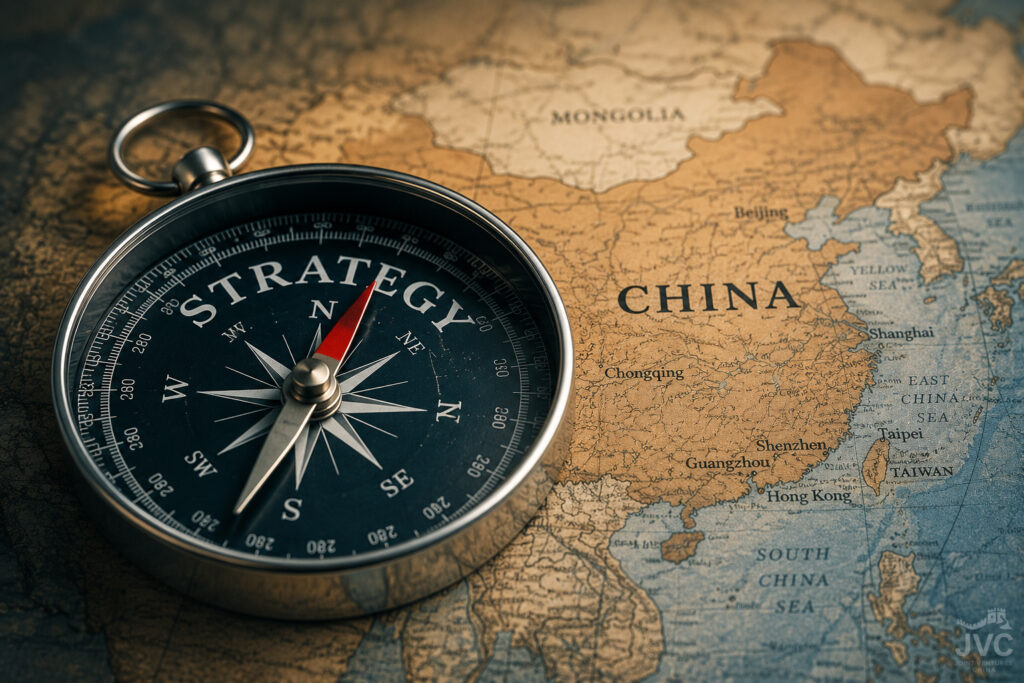
Strategy Is a Living System
One lesson I have learned over the years is that China business strategy should never become an annual event.
Too many organizations treat strategic planning as something completed during budget season. Teams produce presentations, establish objectives, allocate resources, and consider the work finished until the following year. Markets, however, do not wait for annual planning cycles.
An effective China market strategy behaves like a living system. Every customer conversation provides new information. Every competitor launch reveals changing priorities. Every regulatory adjustment creates new constraints or opportunities. Every operational challenge offers another chance to refine how the organization competes. Effective companies doing business in China funnel all these inputs consistently throughout the year.
That perspective changes the role of leadership.
Instead of protecting the existing strategy, leaders become responsible for ensuring an adapting business strategy in China that continues to evolve.
The companies that consistently outperform are rarely those with perfect forecasts. They are the organizations willing to adjust faster than competitors.
Execution plays an important role in that process. Speed alone is not enough, but once the direction is correct, organizations able to move quickly gain meaningful advantages. Momentum allows companies to learn from real market feedback instead of waiting for perfect certainty before taking action.
At the same time, adaptation should never become random experimentation. Effective leaders establish clear objectives while remaining flexible about how those objectives are achieved. That balance allows organizations to remain aligned globally without becoming rigid locally.
China Doesn’t Stand Still. Neither Should Your Strategy.
Explore more practical leadership insights from nearly two decades of executive experience managing business in China.
Executive Insight
One of the most dangerous statements an executive team can make is, “This is how we’ve always approached China.”
Experience should provide perspective, not permanent answers.
Every successful China business strategy eventually reaches the point where it deserves to be questioned. Leaders who view that moment as failure often resist change. Leaders who view it as part of responsible management create organizations capable of adapting continuously.
A China business strategy is not successful because it lasted for ten years.
It is successful because it remained relevant for ten years.
Those are two very different achievements.
Looking Beyond China
Although this discussion focuses on doing business in China, the principle extends far beyond a single market.
Technology changes.
Customer expectations change.
Competitive advantages change.
Organizations that develop the habit of continuously challenging their own assumptions become stronger regardless of geography.
That is one reason I believe the lessons learned in China are becoming increasingly valuable for leaders around the world. China’s pace of change simply makes outdated assumptions visible sooner. Companies that learn to adapt there often become more agile everywhere else.
Research from McKinsey & Company has consistently emphasized the importance of organizational agility and continuous adaptation as key drivers of long-term competitive performance. Those observations align closely with what many executives experience firsthand while operating in China. For organizations interested in broader research on organizational agility, McKinsey provides extensive insights on the topic.
Conclusion
Markets will continue changing.
Customers will continue changing.
Competitors will continue changing.
None of that is optional.
The only decision leaders control is whether their organization changes with them.
The companies that succeed over the long term are rarely those that begin with the perfect strategy. They are the ones willing to question that strategy before the market forces them to.
Leadership accountability is not measured by how confidently executives defend yesterday’s decisions.
It is measured by how effectively they prepare their organization for tomorrow’s realities.
If your China business strategy has not been fundamentally challenged in several years, the most important strategic question facing your organization may not be what China is doing differently.
It may be what your company is still doing the same.
Frequently Asked Questions
How often should a China business strategy be reviewed?
A formal annual review is useful, but a China business strategy should be evaluated continuously. Significant market changes, customer feedback, competitive developments, and regulatory shifts should all trigger discussions about whether existing assumptions remain valid.
What is the biggest mistake multinational companies make in China?
Many organizations assume the strategy that helped them enter China will continue producing results indefinitely. Successful companies continuously adapt their strategy as the market evolves rather than waiting until performance declines.
How is a China market strategy different from a global strategy?
A global strategy establishes overall direction and objectives. A China market strategy adapts those objectives to local competitive conditions, customer expectations, regulatory requirements, and organizational realities while remaining aligned with the broader business.
Why do local Chinese competitors often adapt faster?
Local companies are typically closer to customers and can often make decisions more quickly. Multinational organizations that reduce unnecessary layers of approval and encourage faster learning can narrow this gap while maintaining appropriate governance.
Is adapting business strategy in China only important for large companies?
No. Companies of every size benefit from regularly questioning their assumptions. Smaller organizations often have the advantage of making strategic adjustments more quickly, while larger organizations benefit from establishing processes that encourage continuous learning rather than relying solely on periodic planning cycles. Doing business in China requires companies of all sizes to constantly revisit their strategies.
Enjoying this Insight?
Get weekly real-world insights on Chinese business culture, joint ventures, and China manufacturing.

About the Author — Kevin Burton
Kevin Burton is the General Manager of a China joint venture company manufacturing advanced fiberglass materials for industrial thermal protection systems and EV safety applications. He writes about Chinese business culture, joint venture governance, and how Western leadership assumptions often collide with China’s execution-driven operating systems.